
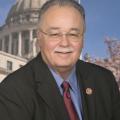
Hello, my name is Gene Newman and I am thankful for the opportunity to represent the voters of Mississippi House of Representative District 61. As a Pearl school graduate who has lived in Pearl for most of my life, I have been a dedicated community leader committed to bringing a strong voice to the area. If you have a legislative issue or any issue or problem dealing with a state agency, please contact me and I will do my best to help.
 I will post House updates below and on the @genenewman61 Facebook page.
Here are the House Committees that I serve on:
Here is a link to bills that I have sponsored or cosponsored in the 2026 session: Legislation introduced by Representative Gene Newman
Thank you!
- Gene
You can call or text me at: 601-316-2491
You can email me at gene@genenewman.ms
RULES: If you put me in a group text or a chain email - I will block you.
The Following Link will take you to AI Bill Summary page. Just put the number of the bill in the space provided and it will give you a summary of the bill.
https://www.legislature.ms.gov/summary/aisummary

- Mississippi Legislature - Bill Summary

2026 Mississippi Legislative Session
Week of March 30, 2026
The 13th and final week of the session has concluded, bringing the 2026 Regular Session to a close. The Mississippi House of Representatives convened on Sunday and adjourned on Friday, April 3. Lawmakers finalized conference reports, adopted the state budget, and completed action on key legislation before adjournment.
During the final week, the House took action on several significant measures, including:
House Bill 343 – Authorizes an income tax credit for employers providing health reimbursement arrangements to employees.
House Bill 525 – Creates mandatory minimum penalties for sexual battery.
House Bill 538 – Prohibits sanctuary policies and strengthens cooperation with federal immigration enforcement.
House Bill 562 – Establishes a tuition-free community college program.
House Bill 377 – Creates the Missing Persons Reporting and Identification Act.
House Bill 1716 – Revises provisions of the Mississippi Main Street Revitalization Grant Program to support community development projects.
House Bill 1662 – Creates a rebuttable presumption in favor of joint custody in child custody cases.
House Bill 1677 – Establishes the Metro Jackson Water Authority.
House Bill 1793 – Exempts firearm safes from sales tax during the annual Second Amendment Weekend holiday.
House Bill 1989 – Provides a sales tax exemption on utilities for certain nonprofit organizations.
House Bill 4060 – Reduces taxes on agricultural inputs, including lime and fencing materials for livestock.
House Bill 4073 – Establishes the Mississippi Work and Save Program and includes provisions related to mobile sports wagering and support for PERS.
In addition, the House adopted multiple appropriation bills to fund state agencies and services for the upcoming fiscal year, including education, healthcare, public safety, and infrastructure.
Many House Resolutions were passed, honoring numerous individuals and organizations for their accomplishments and service. Visitors this week included the Gammon Family, East Rankin Academy, Brookhaven Academy, Mississippi Delta Community College SGA, Meridian High School Choir, Hartfield Christian Academy, and Northpointe Christian School.
Week of March 23, 2026
The twelfth week of the 2026 Regular Session has concluded. The Mississippi House of Representatives focused primarily on conference negotiations, naming conferees on dozens of House and Senate bills as lawmakers work toward final passage ahead of key deadlines. The chamber also passed several local and private measures.
Conference bills included:
HB 525 – Establishes mandatory minimum penalties for sexual battery offenses.
HB 538 – Prohibits sanctuary policies and restricts interference with federal immigration enforcement.
HB 562 – Creates the Mississippi Career and Technical Education Employability (MissCATEE) program to provide tuition-free community college opportunities.
HB 1224 – Establishes the Mississippi Keeping Kids Safe Online Act.
HB 669 – Authorizes direct sales and shipment of distilled spirits to residents in the state.
HB 1640 – Requires the Department of Human Services to utilize commercial wage verification services for eligibility determination.
HB 1677 – Creates the Metro Jackson Water Authority Act.
HB 1793 – Provides a sales tax exemption on retail sales of firearm safes during the annual Mississippi Second Amendment Weekend holiday.
Several suffrage restoration bills were passed, and conference work continued on Senate legislation related to immigration enforcement, workforce development, juvenile justice, and appropriations. A number of conference reports were adopted during the week, covering legislation related to disaster funding, seafood labeling requirements, and higher education property transactions.
In addition to conference activity, the House passed a series of local and private bills related to counties and municipalities, including measures concerning economic development, infrastructure, tourism, and court operations. These bills were transmitted to the Senate for further consideration.
The Mississippi State Capitol welcomed a number of visitors throughout the week, including the Mississippi School for the Deaf and Blind, Germantown High School Choir, Brandon Mayor’s Youth Council, Jefferson Davis County Mayor’s Youth Council, Heritage Christian Academy, USM Army ROTC, New Albany Middle School SGA, City of D’Iberville Youth Leadership Council, Coast Episcopal School, Old Town Middle School, Pascagoula Mayor’s Youth Council, Simpson Academy Girls Basketball team, Milam Girls Leadership, Harper McCaughan Elementary School, and Northwest Jackson Middle School.
Key deadlines during the week included March 23 for final action on motions to reconsider appropriation and revenue bills, March 26 for concurrence or nonconcurrence on general bills and constitutional amendments, March 27 for the introduction of local and private bills, and March 28 for the filing of conference reports on appropriation and revenue bills and final action on general bills and constitutional amendments. The House will return on Sunday to consider conference reports filed ahead of the March 28 deadline. March 30 is the deadline for final adoption of conference reports on appropriation and revenue bills and for conference reports on general bills and constitutional amendments to be filed.
Week of March 16, 2026
The eleventh week of the 2026 Regular Session has concluded. The Mississippi House of Representatives continued to work on Senate legislation and appropriation measures ahead of key deadlines. The House considered legislation related to healthcare, public safety, economic development, tax policy, and state finances, while continuing negotiations on the state budget.
During the week, the House moved forward with several notable bills, including:
Senate Bill 2824 — Extends deadlines and revises provisions related to ad valorem tax exemptions to support economic development projects.
Senate Bill 3227 — Authorizes the designation of winter storm recovery zones for qualified equity investment tax credits.
House Bill 895 — Revises provisions of the state’s medical cannabis program, including extending certification periods.
House Bill 1404 — Creates penalties for landlords who fail to pay utility services, resulting in disruptions for tenants.
House Bill 1546 — Revises provisions related to human trafficking offenses and expungement eligibility.
House Bill 1577 — Clarifies provisions regarding false reporting of child abuse.
House Bill 1633 — Revises provisions of the Site Development Grant Program to support economic development initiatives.
The House also considered additional measures related to grant oversight and accountability, tax policy adjustments, and consumer protections, while advancing multiple appropriation bills for state agencies and naming conference committees as budget negotiations continue.
Key legislative deadlines were reached during the week. Tuesday, March 17, marked the deadline for original floor action on appropriation and revenue bills originating in the other chamber. Wednesday, March 18, was the deadline for reconsideration and passage of those bills, followed by Thursday, March 19, which served as the deadline to dispose of motions to reconsider. Friday, March 20, was the deadline to concur or not concur on amendments from the other chamber on appropriation and revenue bills, as well as the deadline for introduction of local and private revenue bills. Monday, March 23, marks the deadline to dispose of motions to reconsider concurrence or nonconcurrence on those measures.
The Mississippi State Capitol welcomed a wide range of visitors this week, including Chair of the Irish Senate, Mark Daly, Magnolia Heights School, South Salem Children’s Ministry of Oxford, Florence High Lady Eagles Soccer, Calhoun City Football and Basketball teams, West Tallahatchie School District Jr. Beta Club, Omega Lamplighters, Picayune Mayor’s Youth Council, North Bolivar School District SGA, First Baptist Church Friday Program, Leadership Greater Jackson Youth Cohort, and Anchor Christian Academy.
Week of March 9, 2026
The tenth week of the 2026 Regular Session has concluded. The Mississippi House of Representatives continued to work on Senate legislation ahead of key deadlines. The House considered measures including public safety, healthcare, economic development, family law, and state finances. The House also passed several Senate appropriation bills to fund state agencies and programs for the upcoming fiscal year.
During the week, the House passed many notable bills, including:
Senate Bill 2062 — Expands the Consumer Freedom of Choice Act to include motor vehicles, tools, and farm equipment, allowing owners and independent repair providers greater access to parts and service information.
Senate Bill 2114 — Criminalizes illegal entry under state law and requires cooperation with federal immigration authorities.
Senate Bill 2474 — Establishes a Rural Hospital Pilot Program to support healthcare access in underserved communities.
Senate Bill 2477 — Requires certain recipients of Rural Health Transformation Fund monies to participate in a competitive bidding process.
Senate Bill 2821 — Creates the crime of capital sexual battery.
Senate Bill 2863 — Enacts the Bayou Casotte Industrial Zone Establishment Act to support economic development on the Gulf Coast.
Senate Bill 2895 — Directs the transfer of certain available and unexpended federal ARPA funds.
Senate Bill 2917 — Revises certain disbursements from previous fiscal years and authorizes additional fund transfers.
The House also considered measures addressing solar facility decommissioning requirements, child support enforcement, driver’s license provisions, and zoning procedures for local governments.
Key legislative deadlines were reached during the week. Wednesday, March 11, marked the deadline for original floor action on general bills and constitutional amendments originating in the Senate. Thursday, March 12, served as the deadline for reconsideration and passage of those measures, and Friday, March 13, was the deadline to dispose of motions to reconsider.
To meet the upcoming deadline on Tuesday, March 17, for original floor action on Senate appropriation and revenue bills the House passed their position on the budget on Thursday, March 12. Friday, March 20, is the deadline for the House to concur or not concur with Senate amendments to original House bills on appropriation and revenue bills.
The Capitol welcomed a wide range of visitors this week, including Pleasant Hills Mennonite School, St. Alphonsus Catholic School, the Mississippi Early Childhood Development Coalition, nutrition and dietetic students from the University of Southern Mississippi, the McComb Youth Council NAACP, the Hattiesburg High School Choir, Boys and Girls Club Youth of the Year participants, the Kay’ce Everett Homeschool Group, and alumni from Mississippi University for Women.
Week of March 2, 2026
The ninth week of the 2026 Regular Session has concluded. On Friday, the Mississippi House of Representatives unanimously passed Senate Bill 2103, which was amended to include the House’s original teacher pay proposal. The amendment includes a $5,000 teacher pay raise, along with a $3,000 additional supplement for special needs teachers and assistant teachers, and a $6,000 supplement for occupational therapists and licensed school psychologists. The measure also includes several adjustments to PERS Tier 5, including changing state employee retirement eligibility from 35 years to 30 years, adjusting the retirement salary calculation from the highest eight years to the highest four years, and lowering the retirement age from 62 to 60, and adjusting first retirement eligibility from 35 years to 25 years. The bill also allows retired teachers to return to work while continuing to receive their PERS benefits.
The House also passed the following:
House Bill 1758 – Enacts the Foster Youth Earned Benefits Protection for Success Act, protecting benefits for youth in foster care.
Senate Bill 2018 – Creates the Mississippi National Guard TRICARE Premium Reimbursement Program.
Senate Bill 2036 – Clarifies that certain nonviolent inmates eligible for parole may be released from incarceration to parole supervision at the discretion of the State Parole Board.
Senate Bill 2110 – Provides that a parent, legal guardian, or other person responsible for a child who deprives the child of necessary supervision appropriate to the child’s age, resulting in substantial harm to the child’s physical, mental, or emotional health, may face criminal penalties, including imprisonment.
Senate Bill 2654 – Creates a State Security Operations Center within the Mississippi Department of Information Technology Services to strengthen cybersecurity, coordinate security services, and support state agencies in responding to cyber threats.
Senate Bill 2726 – Updates provisions related to the Mississippi Opioid Settlement Fund and Advisory Council, which oversee the distribution and use of opioid settlement funds.
Senate Bill 2896 – Revises the salary schedule for Mississippi Highway Patrol and Bureau of Narcotics officers.
The following bills were returned to the Senate for concurrence:
Senate Bill 2409 – Creates the “Strengthen Mississippi Homes Act,” establishing a mitigation program within the Mississippi Department of Insurance to help retrofit homes against hurricanes, tornadoes, and other catastrophic wind events and increasing grant funding up to $15,000 per home.
Senate Bill 2524 – Establishes the Mississippi Postsecondary Attainment Council to improve postsecondary education outcomes and require annual progress reports on the state’s attainment goals.
Senate Bill 2632 – Creates the Local Governments Disaster Recovery Emergency Loan Program to assist communities recovering from disasters.
The House met the Tuesday, March 3, 2026, deadline for committees to report general bills and constitutional amendments originating in the Senate, and many committees met throughout the week.
The Capitol welcomed students, educators, and community groups this week, including Forrest County Agricultural School, Unlimited Dreams Christian Academy, Loyola University Chicago School of Law, USS Jackson Officers, New Albany Choir, Newton County Choir, First Presbyterian Day School Group, Christ Covenant School, Biloxi High School Business & Marketing, Biloxi High School Hospitality & Tourism, Tupelo High School Social Studies Class, Lamar Elementary School, COABE State Fellowship, Reimagine Prep Football Team, New England College, Jackson County Chamber of Commerce, and Chalybeate Elementary School.
Week of February 23, 2026
The 2026 Regular Session has officially completed its eighth week. The House continued work on appropriation and revenue measures this week as key deadlines arrived on the legislative calendar.
Monday, February 23, marked the deadline for making requests for appropriation and revenue bills to be drafted. Wednesday, February 25, was the deadline for original floor action on appropriation and revenue bills originating in the House and Thursday, February 26, served as the deadline for reconsideration and passage of those measures. With these deadlines met, the House has advanced its appropriation and revenue legislation to the Senate for further consideration.
During the week, the House passed several significant measures, including:
House Bill 4074 – Creates the Mississippi Mobile Sports Wagering Act, establishing a regulatory framework for mobile sports betting in the state.
House Bill 4069 – Creates the Mississippi Severe Winter Storm of 2026 Electric Utility Customer Relief and Electric Utility System Restoration Act in response to recent winter weather impacts.
House Bill 4065 – Creates the Mississippi School Resource Officers School Safety (MS ROSS) Act to provide funding to local law enforcement agencies for school safety initiatives.
House Bill 4073 – Creates the Mississippi Work and Save Program, authorizes bond issuance, and revises certain income and sales tax provisions to establish a retirement savings framework.
House Bill 1063 – Revises ad valorem tax provisions related to energy projects and economic development incentives.
House Bill 4014 – Excludes Name, Image, and Likeness (NIL) compensation from gross income for state income tax purposes.
House Bill 1941 – Authorizes the issuance of bonds for the Mississippi Outdoor Stewardship Trust Fund.
The Capitol welcomed several visitors throughout the week, including Hancock Youth Leadership Academy, Coffeeville High School, Montgomery County 4-H Leadership, MRA Government Class, Puckett High School, Brooklyn High School FFA, Stone County FFA, Mississippi Optometric Association, South Jones Band, JSU Health Policy Class, Senatobia Elementary, the Horn Lake Mayor’s Youth Council, the Collins Mayor’s Youth Council, the DeSoto County Mayor’s Youth Council, the Hernando Mayor’s Youth Council, the Gautier Mayor’s Youth Council, and the Olive Branch Mayor’s Youth Council.
The House will continue its work on Senate legislation and remaining fiscal matters as the session progresses toward upcoming deadlines.
Week of February 16, 2026
The seventh week of the 2026 Regular Session has concluded. February 16 marked the deadline to dispose of motions to reconsider general bills and constitutional amendments originating in the House.
During the week, the House considered and passed 53 appropriation bills funding state agencies for the upcoming fiscal year, including the Departments of Education, Health and Human Services, Transportation, Environmental Quality, Wildlife, Fisheries and Parks, and the Division of Medicaid, along with judicial offices and regulatory boards. These measures represent continued progress in advancing the state budget.
The House also passed Senate Bill 2294 – the Mississippi Future Innovators Act, which requires high schools to offer computer science courses or career and technical education (CTE) programs with embedded computer science instruction.
Additionally, the House adopted several resolutions recognizing outstanding individuals, student achievements, and championship athletic teams, as well as a resolution encouraging continued economic ties and friendship with the Republic of China (Taiwan).
The Alcorn State University Choir performed in the Capitol rotunda on Tuesday.
The Capitol welcomed students, educators, and community groups this week, including Delta Sigma Theta, Alcorn State University Choir, Ridgeland Mayor’s Youth Council, Madison County Youth Leadership, Jackson Prep AP Government Class, Enterprise High School Senior History Class, River Heritage Home School, Classical Conversations Home School, Revive Church Home School, Impact Home School, Stone County Home Schoolers, Petal High School Ambassadors, Hartfield Varsity Cheerleaders and Dance, Word of Truth Ministries, Rankin Youth Leadership, Natchez High School, DAR Members, First Baptist Church Kindergarten, St. Augustine School, and Hope Academy.
Week of February 9, 2026
The sixth week of the 2026 Regular Session has concluded. The House continued advancing major legislation as key floor deadlines approached, taking up measures related to public safety, healthcare, education funding, and disaster response.
During the week, the House considered and passed several significant pieces of legislation, including:
House Bill 424, “Assisted Outpatient Treatment (AOT)” – Authorizes courts to order assisted outpatient treatment as a community-based alternative to inpatient commitment for individuals with serious mental illness. Establishes eligibility standards, required court findings, treatment oversight procedures, and ensures the respondent’s right to legal representation.
House Bill 520, “Child Support Enforcement via Gaming Winnings” – Requires the Mississippi Gaming Commission to work with the Department of Human Services to withhold or encumber gaming winnings from individuals with outstanding child support arrears. The bill establishes procedures to secure payments and aligns related statutes to support collection efforts.
House Bill 525, “Mandatory Minimum for Sexual Battery” – Establishes mandatory minimum prison sentences for certain sexual battery convictions, including a minimum of five years for specified first offenses and enhanced penalties for repeat offenders. Courts may issue criminal sexual assault protection orders prohibiting contact with victims, with penalties for violations.
House Bill 538, “Sanctuary Policies” – Expands the prohibition on sanctuary policies, requiring state and local governmental entities, including public colleges and universities, to fully cooperate with federal immigration authorities. Authorizes the Attorney General to investigate and prosecute violations and allows for waiver of sovereign immunity for noncompliance.
House Bill 669, “Direct Shipment of Distilled Spirits” – Authorizes direct sales and shipment of distilled spirits to residents of the state under specified regulations.
House Bill 672, “Sunday Alcohol Sales” – Allows counties, municipalities, tribes, or state agencies in wet areas to permit package retailers to sell alcohol on Sundays between 1:00 p.m. and 6:00 p.m. Retailers are not required to open on Sundays, and all existing restrictions and penalties for alcohol sales remain in effect.
House Bill 1224, “Mississippi Keeping Kids Safe Online Act” – Establishes requirements for online platforms to enhance protections for minors and improve parental oversight tools.
House Bill 1310, “Mississippi Open to Religion Act” – Requires public schools and nonsectarian charter schools to offer a daily voluntary period of prayer and Bible or religious text reading. Participation requires written consent and waivers of legal claims, cannot replace instructional time, and may not be broadcast over school systems. The Attorney General may provide guidance and legal defense, and the act does not limit individual prayer or other religious expression.
House Bill 1402, “Colonel Donnell Berry Memorial Highway” – Designates a one-mile segment of U.S. Highway 49 North in Yazoo County as the “Colonel Donnell Berry Memorial Highway” and requires the Mississippi Department of Transportation to install and maintain appropriate signage.
House Bill 1577, “Willful False Reports of Child Abuse” – Clarifies that a report of child abuse is criminally false only when intentionally made without credible evidence. Authorizes restitution to law enforcement and the Department of Child Protection Services for investigative costs and establishes penalties of up to one year in jail, a $5,000 fine, or both.
House Bill 1645, “State-Managed Disaster Act of 2026” – Establishes the State-Managed Disaster Assistance Program to allow MEMA to administer state-funded emergency preparedness, response, and recovery efforts. Creates the State-Managed Disaster Assistance Trust Fund and authorizes allocations to state and local agencies for disaster-related costs.
House Bill 1662, “Rebuttable Presumption for Joint Custody” – Establishes a rebuttable presumption in favor of joint custody in certain child custody proceedings.
House Bill 1677, “Metro Jackson Water Authority Act” – Creates the Metro Jackson Water Authority and outlines governance, oversight, and operational provisions.
House Bill 1763, “Public Land Purchase Restrictions” – Extends the date of the repealer on restrictions preventing certain corporations and nonresident aliens from purchasing public lands. Nonresident aliens may still acquire limited acreage for industrial or residential purposes, and banking or nonbanking corporations remain subject to existing rules and limitations.
The Capitol welcomed students, educators, and community groups this week, including MHA Emerging Leaders, UMMC Medical Students, Carthage Christian Academy, 4-H State Officers, Simpson County Youth Leadership, USM CRNA Students, the Mississippi Valley State University Choir (who performed in the Capitol), Madison County Executive Leadership, JSU NAACP, Vicksburg Junior High School, Tupelo Christian Cheerleaders, Leadership Vicksburg, Mississippi Youth Challenge Academy, the National Association of Social Workers – Mississippi Chapter, Oakdale Elementary School, Delta Health Alliance, Lipsey Middle School, Heritage Academy, Leadership DeSoto, Natchez High School, and the Secretary of State Student Ambassadors.
Week of February 2, 2026
The fifth week of the 2026 Regular Session has concluded. February 3 marked the deadline for committees to report general bills and constitutional amendments. February 12 is the deadline for original floor action on these measures, and February 13 is the deadline for their reconsideration and passage.
During the week, the House considered and passed several significant pieces of legislation, including:
House Bill 430, “Certificate of Need,” Revises the state’s Health Care Certificate of Need law by removing end-stage renal disease facilities from CON requirements, allowing these facilities to be established or expanded without going through the Certificate of Need approval process.
House Bill 571, “Foreign National Contributions,” Prohibits foreign nationals from making contributions or expenditures in connection with any state or local ballot measure and bars the solicitation or acceptance of such contributions.
House Bill 737, “Medicaid Provider Repayment Plans,” Requires the Division of Medicaid to allow providers to repay incorrect Medicaid payments through an installment plan for non-fraudulent overpayments that would cause financial hardship if repaid immediately, with full repayment required no earlier than twelve months from the start of the plan.
House Bill 788, “Affidavit Ballots,” Provides that an eligible voter’s affidavit ballot may be used as voter registration, allows a valid affidavit ballot to serve as a written request to transfer voting precincts or wards, and return inactive voters to active status upon casting an affidavit ballot.
House Bill 895, “Medical Cannabis,” Extends certification and registry card validity periods, removes the mandatory six-month follow-up visit, allows equal purchase limits for nonresident cardholders, and removes THC potency limits for certain cannabis products.
House Bill 908, “Absentee ballots,” Requires absentee ballots for federal elections to be received by the day before the election if federal law preempts state absentee voting rules.
House Bill 925, “CLEAR Act,” Establishes the Creating Logic for Efficiency and Accountability Reform (CLEAR) Act, authorizing the PEER Committee to review newly adopted state agency rules, evaluate health regulatory boards, conduct Medicaid program assessments, and oversee compliance with subpoenas to improve efficiency, accountability, and transparency in state government operations.
House Bill 999, “Mississippi Parkinson’s Disease Research Registry,” Establishes a state registry under the Department of Health to track Parkinson’s disease and related disorders, collect data from healthcare providers, allow patient opt-out, ensure confidentiality, and provide researchers and the public with information to support research and awareness.
House Bill 1034, “Compassionate Access to Medical Cannabis Act” or “Ryan’s Law,” Allows terminally ill patients in hospitals, nursing homes, and hospice facilities to safely use medical cannabis, with secure storage and administration handled by the patient or their caregiver, while prohibiting smoking or vaping.
House Bill 1072, “Voluntary Portable Benefit Plan Act,” Allows hiring parties to voluntarily contribute to independent contractors’ portable benefit accounts, with tax deductions for contributions and exclusion from the contractor’s taxable income.
House Bill 1126, “Teacher Salary Increase,” Increases the teacher salary scale by $5,000 and maintains the assistant teacher program. Includes performance-based pay, mentor teacher supplements, and additional pay for nationally certified teachers, nurses, counselors, and speech-language pathologists.
House Bill 1294, “Child Grooming and Sexual Battery Amendment Act,” Strengthens laws against child grooming and sexual battery, clarifying definitions, including electronic device use, and increasing penalties, especially for offenders in positions of trust.
House Bill 1404, “Fraudulent Utility Conversion,” Creates the crime of fraudulent utility conversion when a landlord fails to pay utilities after collecting payment from a tenant, establishes penalties based on the amount involved, and requires landlords to reimburse tenants for unpaid utilities.
House Bill 1581, “Mississippi Mobile Sports Wagering Act,” Legalizes online sports pool and race book betting in Mississippi, establishes licensing requirements for platforms and gaming establishments, sets rules for age verification and geofencing, and allows the Gaming Commission to collaborate with DHS to withhold winnings for unpaid child support.
House Bill 1665, “Pharmacy Benefit Management and State Employee Health Plan Reform,” Updates and amends provisions related to the State and School Employees Life and Health Insurance Plan, including administration, strategic planning, benefits, retiree coverage, and the Pharmacy Benefit Prompt Pay Act, while ensuring transparency, advisory council input, and compliance with current health care practices.
House Resolution 25 - Gulfport High School Football Team; commended on winning the MHSAA Class 7A State Championship.
The Capitol welcomed students, educators, and community groups this week, including Mississippi Academy of Physicians, Prentiss Christian School, St. Francis Xavier Academy, Leadership Greater Jackson, Leadership Jones County, Petal Mayor’s Youth Council, Mississippi Early Learning Alliance, North Pike Junior High Student Council, Southeast Lauderdale Gifted Education, St. Andrews Episcopal School, Coffeeville High School, St. Augustine School, and Girl Scout Troop 4775.
Week 4: Week of January 26, 2026
The fourth week of the 2026 Regular Session has concluded. Committee work and floor action on a range of health care and insurance-related legislation were a major focus this week, with more than 15 House committees meeting to consider bills. February 3 is the deadline for committees to report general bills and constitutional amendments. The State of the State Address has been postponed until February 4, due to a severe ice storm that impacted large areas of Mississippi.
House Bill 565, known as “Jill’s Law,” would require state-regulated health insurance plans, including Medicaid and the State and School Employees Health Insurance Plan, to cover biomarker testing when it is medically necessary to diagnose, treat, manage, or monitor a patient’s condition. The measure is named in honor of Jill Eure, the late wife of Representative Casey Eure.
House Bill 1117, the “Creating Transparency and Accountability in Dental Services Act,” would require dental insurance carriers to calculate and report their dental loss ratios, the amount they collect in premiums versus what they pay out in claims. The reports must be turned in to Mississippi’s Insurance Commissioner, who will make the information publicly available to increase transparency and accountability in the dental insurance market.
The Capitol welcomed several visitors this week including SPIRE Learning Center, EMCC School of Nursing, UMMC Dental Hygiene students, Jefferson Davis High School, the Mississippi Nurse Practitioner Association, the Alderwomen of Clinton, Mississippi College nursing students, Boys2Men, the Mississippi Coalition against Domestic Violence, and the Lamar School Football Team.
Week 3: January 19, 2026
The third week of the 2026 Regular Session has concluded, with the Mississippi House focusing its floor activity primarily on health care and regulatory matters. On Wednesday, the House considered and passed four House Bills following debate and discussion among members.
House Bill 314, the Ibogaine Drug Development Clinical Trial Act, authorizes the establishment of clinical trials to study the use of the psychedelic drug ibogaine as a potential treatment for post-traumatic stress disorder (PTSD) and substance addiction.
House Bill 534 establishes the Mississippi Health Information Exchange. This measure creates a statewide system for the secure, electronic sharing of health information and, at a minimum, provides real-time bidirectional access to patient admission, discharge, and transfer data. The exchange is intended to improve care coordination, efficiency, and communication among health care providers across the state.
House Bill 431 allows certain dental hygienists employed by the State Board of Health or public school boards to perform oral hygiene instruction, screenings, and educational demonstrations under the general supervision of a licensed dentist.
House Bill 3 revises provisions related to a hospital holding a certificate of need for a 40-bed psychiatric residential treatment facility in DeSoto County; the bill previously passed the House twice last year and passed again this week with revised provisions.
In addition to floor action, numerous House committees met throughout the week to consider legislation and advance bills ahead of upcoming deadlines. January 19 marked the deadline for the introduction of general bills and constitutional amendments. The next major deadline is February 3, the deadline for committees to report general bills and constitutional amendments originating in their own House.
The Capitol also welcomed several visitors this week, including Mississippi College, Presbyterian Day School of Kosciusko, UMMC Doctor of Physical Therapy students, the Columbia High School Choir, the Southaven Chamber, Stone Middle School Student Council, CARES School, and East Flora Elementary.
Week 2: January 12. 2026
The second week of the 2026 Regular Session of the Mississippi Legislature has concluded. The House continued its work on a variety of issues, with education remaining the main focus. Lawmakers engaged in discussions and committee work on several measures related to schools, families, and educational policy, while also considering legislation regarding judicial structure and state funding.
The House took up legislation proposing revisions to the Fourth and Seventh Circuit Judicial Districts. After review and consideration by the Judiciary B Committee, the bill was brought to the House floor, where it passed. Lawmakers discussed aspects of judicial administration and the potential consequences for the districts involved.
In addition, the House considered legislation related to lottery and gaming fees, which included proposals to revise the distribution of these funds to support the State Highway Fund and the Education Enhancement Fund. These measures were reviewed by the Transportation Committee, and after discussion on funding priorities and the potential impact on state programs and projects, it was brought to the House floor and passed.
Education policy remained at the forefront during the week. On Tuesday, the House Education Committee met to consider House Bill 2, the Mississippi Educational Freedom Program Act of 2026. The committee engaged in extensive discussion, carefully reviewing various perspectives and potential implications of the bill. Following deliberation, the committee approved the measure and sent it to the full House for further consideration.
On Thursday, HB 2 was debated on the House floor for over four and a half hours. Lawmakers participated in an insightful discussion that included perspectives from both supporters and opponents of the bill. Topics addressed included the potential effects of school choice and expanding educational opportunities. The debate allowed members to present questions, concerns, and points of support, ensuring a thorough review of the measure before the chamber. After careful consideration, HB 2 was passed by the House and will continue through the legislative process.
The Mississippi Educational Freedom Program Act of 2026 seeks to create an education choice program by establishing Magnolia Student Accounts (MSAs) for eligible students. These accounts would allow state education funds to follow students to participating schools—public or private—approved education service providers, or legitimate home instruction programs. The act phases in eligibility over several years, prioritizing low-income families and students with special needs. It also integrates existing Education Scholarship Account (ESA) programs into the new framework and sets caps on yearly participation that gradually increase. The Office of the State Treasurer would serve as the fund manager, with authority over eligibility, disbursements, vendor contracts, audits, and enforcement of rules.
With the passage of these measures, the House concluded another week of focused work on education and state policy. The House is adjourned until 4:00 p.m. on Monday.
Week 1: January 5, 2026
The Mississippi State Legislature began its 2026 regular session on Tuesday, January 6, 2026.
Lawmakers convened at the Mississippi State Capitol in Jackson at noon to start session, which
is scheduled to run for 90 days through early April.
On Tuesday, Representative Justin Crosby was formally sworn in and took the oath of office.
The House also referred several vetoes from the 2025 Regular Session and the Extraordinary
Session back to their original committees for further review and consideration.
By the second day of session, committee activity was already underway. The House Education
Committee held a hearing focused on school choice, during which parents from across the state
shared their experiences navigating Mississippi’s education system. The discussion was
centered on the challenges families face in securing what they believe to be the most
appropriate educational setting for their children. Committee members heard directly from
parents about the obstacles impacting Mississippi students and families.
On Thursday, additional legislative business took place on the House floor as the first bill of the
2026 legislative session was brought forward for consideration. Representative Jansen Owen (R
– Poplarville) presented House Bill 1, a judicial and court-related measure that revises the
number of chancellors in the Third Chancery Court District and updates certain qualifications
subject to the governor’s approval.
Legislative business is continuing to move forward as bills are being referred to the appropriate
committees for consideration. The Judiciary B Committee met to begin reviewing assigned
legislation, while the House Rules Committee convened to address procedural matters related
to the flow and scheduling of bills during the session.
The House is adjourned until 4:00 p.m. on Monday.

House members took the oath of office on the first day before the election of Speaker of the House and Speaker Pro Tempore. As part of the House Rules, both positions and the House Clerk are elected by the members and are sworn into office on the first day of session. Representative Jason White (R – West) was elected Speaker of the House after previously serving as Speaker Pro Tempore. Former Local and Private Chairman Manly Barton (R – Moss Point) was chosen as Speaker Pro Tempore. Andrew Ketchings was re-elected as House Clerk for his fourth term.
Members also had to elect fellow representatives to serve on both the Management and Rules committees. All members split into the four Mississippi congressional districts and nominate members to serve on these committees. Both committees are comprised of two members from each of the congressional districts, as well as the Speaker and the Pro Tempore.
Speaker Jason White announced several new House committees, including a major change to Appropriations. There will be four new standing committees within Appropriations (Appropriations B, Appropriations C, Appropriations D and Appropriations E), and these will each be comprised of eight members from the main Appropriations Committee. The Chairman of Appropriations will also serve as an ex officio voting member of the four committees. Each committee will be tasked with a portion of the state budget. Other new committees include Business and Commerce, Housing and State Affairs.
Six statewide elected officials were sworn into office by Chief Justice Michael Randolph before a joint session of the House and Senate on Thursday, January 4. The joint session also re-elected Steven Parks as state librarian.
The inauguration ceremony of Governor Tate Reeves is scheduled for next Tuesday, January 9 at 10:30 a.m. before a joint session of the House and Senate.
Early Wednesday morning, officials received a bomb threat to the Capitol, and the building was evacuated. The Mississippi Department of Public Safety conducted a thorough sweep of the premises and gave the all-clear around 11 a.m. A similar threat was made on Thursday morning to the Capitol, Mississippi Supreme Court and some Hinds County buildings. Mississippi was one of several states that received a bomb threat, and the FBI announced these were all hoaxes.
The Capitol was overflowing with guests this week due to inaugurations. Visitors to the Capitol are always welcome to meet with their legislators and witness the legislative process.

Being Sworn in January 2, 2024